Top 10 Emerging Real Estate Markets to Watch in 2025
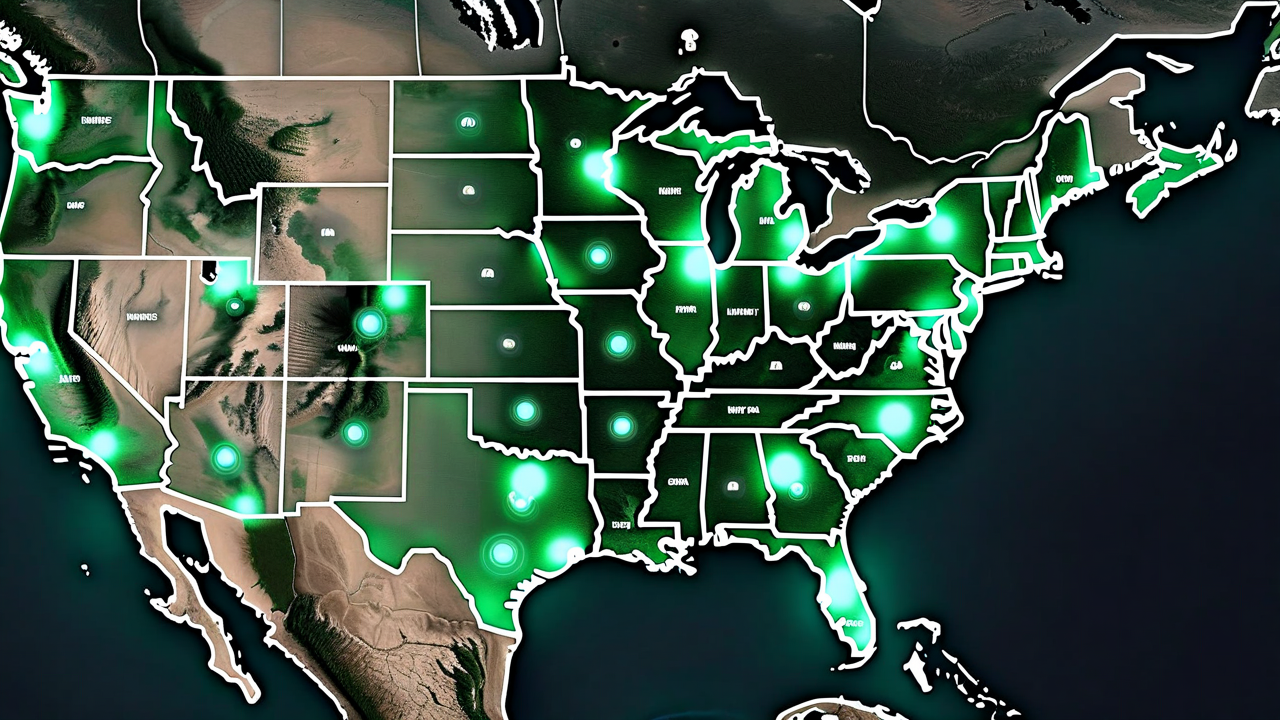
Every year, capital flows shift in real estate — driven by migration patterns, job creation, infrastructure investment, and the long tail of demographic change. In 2025, those forces are converging in some markets more powerfully than anywhere else in the country. PropBrain's data science team analyzed more than 800 metropolitan and micropolitan statistical areas using a composite scoring model that weighs population growth, employment concentration, housing supply constraints, rent growth trajectories, and cap rate trends. The result is our list of the top 10 emerging real estate markets that represent the most compelling investment opportunities this year.
This is not a list of the biggest or most glamorous markets — New York, Los Angeles, and San Francisco are notable for their absence. These are the cities where the signal-to-noise ratio is highest: where fundamentals are strengthening faster than prices have moved to reflect that strength, creating windows of opportunity for informed investors who act before the crowd catches on.
Our Methodology
PropBrain's market scoring framework combines quantitative metrics across five categories: economic growth momentum (30%), housing supply-demand dynamics (25%), population and migration trends (20%), investment activity and capital flows (15%), and infrastructure and quality-of-life improvements (10%). Each market receives a score from 0 to 100, and we track movement in these scores quarterly to identify accelerating trends.
For this analysis, we specifically filtered for markets that showed score improvement of at least 8 points over the trailing 12 months — indicating active, ongoing improvement rather than coasting on past momentum. Markets that scored high historically but have plateaued were deprioritized in favor of those showing active acceleration. The result is a list that is deliberately forward-looking, not backward-looking.
The Top 10 Markets
1. Huntsville, Alabama. Huntsville has been quietly building one of the most powerful economic growth stories in the South for a decade, and 2025 is the year it fully breaks into the national investment conversation. The defense and aerospace sector anchored by Redstone Arsenal and NASA's Marshall Space Flight Center provides exceptional employment stability, while a growing tech ecosystem — fueled by Toyota, Lockheed Martin, and a wave of cybersecurity startups — is diversifying the economic base. Median home prices remain well below the national average despite sustained appreciation, and PropBrain's rent growth model projects continued strength through 2026.
2. Boise, Idaho. After a few years of correction following the pandemic-era surge, Boise is showing renewed strength. Tech workers priced out of Seattle and San Francisco continue to relocate here, drawn by quality of life, outdoor recreation access, and a no-state-income-tax environment. Housing supply growth has slowed as builder confidence lagged the correction, creating a tightening dynamic that our models associate with price acceleration over the next 18 months.
3. Columbus, Ohio. The Intel semiconductor megafab under construction outside Columbus is a multi-billion dollar demand catalyst that will ripple through the regional economy for years. Construction workers, engineers, and supply chain operations are already driving population and employment growth well ahead of forecasts. Columbus has excellent housing affordability by coastal standards, which makes it a particularly attractive market for workforce housing investment.
4. Greenville-Spartanburg, South Carolina. The Upstate South Carolina corridor has emerged as one of the most underrated manufacturing and logistics hubs in the Southeast. BMW's US manufacturing plant, a growing Michelin presence, and a surge of reshoring-related industrial investment have driven employment growth well above national averages. Multifamily demand is particularly strong as workers relocate to the region without the housing equity to immediately purchase homes.
5. Colorado Springs, Colorado. While Denver has matured into a fully priced major market, Colorado Springs continues to offer relative value with strong military employment, a growing tech sector, and one of the most attractive quality-of-life profiles in the Mountain West. PropBrain's data shows above-average days-on-market compression over the past two quarters — a leading indicator of price appreciation to come.
6. Raleigh-Durham, North Carolina. The Research Triangle has long been on investors' radars, but it continues to deliver above-benchmark returns. The combination of three major research universities, a world-class life sciences cluster, and aggressive state-level business development incentives makes Raleigh-Durham one of the most structurally sound long-term real estate markets in the country. Our models show continued rent growth leadership in both multifamily and single-family sectors.
7. Nashville, Tennessee. Nashville's growth story is well-known, but what makes it compelling in 2025 is resilience. Despite above-average supply additions over the past three years, demand absorption has kept pace. Corporate relocations and expansions continue at a rate that few other markets can match. The healthcare, music, and hospitality industries provide economic diversification that buffers against sector-specific downturns.
8. Salt Lake City, Utah. The Silicon Slopes technology cluster centered on Utah County and Salt Lake City proper has matured into a genuine alternative to Bay Area tech campuses. Adobe, Goldman Sachs, and a long list of high-growth startups have established major operations here. Housing supply has grown in response to demand, but our models indicate that supply growth is decelerating while employment growth remains elevated — a combination that historically precedes a tightening cycle.
9. Charlotte, North Carolina. Charlotte is the quintessential steady performer. Financial services employment anchored by Bank of America and Wells Fargo provides a stable economic base, while a diversifying economy increasingly includes tech, healthcare, and advanced manufacturing. Population growth continues to outpace housing construction, and PropBrain's vacancy rate models show tightening across both residential and commercial segments.
10. Phoenix, Arizona. Phoenix makes the list not because it is undiscovered — it is decidedly not — but because our data shows a resumption of growth momentum after a 2023–2024 period of digestion. New employment announcements in semiconductor manufacturing, data centers, and logistics are creating another wave of inbound migration. Investors who avoided the market during the correction period may find that the window for entry at current valuations is narrowing.
How PropBrain Helps Investors Act on Market Intelligence
Identifying a top market is just the beginning. Within each of these metros, performance varies dramatically by submarket, property type, and price tier. The strength of Columbus's near-term fundamentals does not mean every deal in Columbus is a good one. What matters is understanding which submarkets within a top market are seeing the most concentrated demand, where supply is tightest, and what the risk-adjusted return profile looks like for specific investment strategies.
PropBrain's Platform enables exactly this kind of granular analysis. Our market intelligence dashboard allows users to drill down from metropolitan area to zip code to individual street, tracking transaction velocity, price per square foot trends, days on market, and rental yield data at each level. Investors can also set up alerts that notify them when conditions in any tracked market or submarket cross predefined thresholds.
Key Takeaways
- PropBrain's 2025 top emerging markets favor cities with active economic momentum over historically strong but plateaued markets.
- Sun Belt and mid-Atlantic metros dominate the list, driven by migration, job creation, and housing supply constraints.
- Huntsville, Columbus, and Greenville-Spartanburg stand out for institutional-quality fundamentals at below-institutional market awareness.
- Market-level analysis is only the starting point — submarket selection within a top market is equally important.
- PropBrain's platform enables granular, real-time market intelligence down to the zip code and property level.
- Markets showing score acceleration over 12 months are more predictive of future returns than markets with high static scores.
Conclusion
The 2025 real estate landscape rewards investors who combine disciplined data analysis with the conviction to act in markets that have not yet been fully discovered. The ten markets on this list share a common characteristic: strong, accelerating fundamentals that have not yet been fully priced in by the broader market. Whether you are allocating to multifamily, industrial, office, or single-family residential, these cities offer the most favorable risk-reward setup we see in our data today. The window to act in the best of them is open now — but it will not stay open indefinitely.